Onslaught (2026, Wingard)

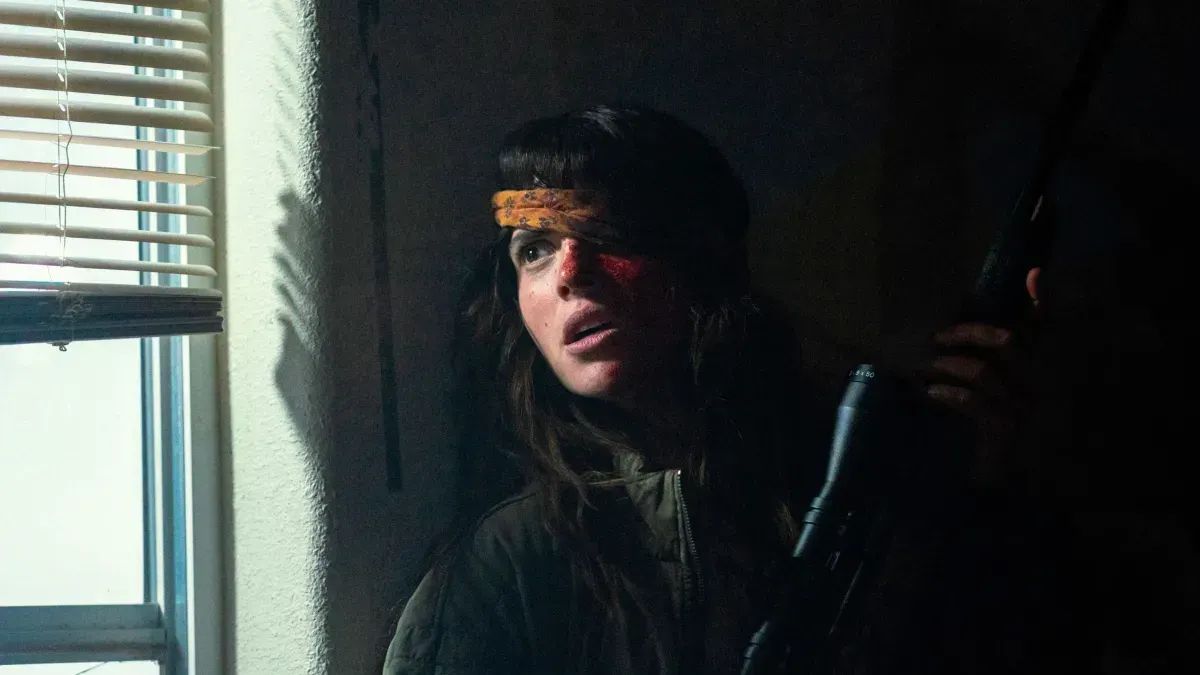
Summer is closing. The weather remains warm, but the chill of autumn whispers its hello with a breeze that reminds us of time’s passing. It would be the perfect opportunity to catch a new John Carpenter movie, wouldn’t it? Too bad he’s been keeping himself busy writing graphic novels and making music. Even his most promising acolytes have mostly hung up the mantle: Adam Wingard, who during the Carpenter boom in the 2010s made the best of the lot with The Guest in 2014, has been hiding out in the IP bushes ever since. The Guest proved both of its moment and totally prescient as it stared down the barrel of a post-Iraq, perpetually at-war America and charged ahead with mischievous glee into its throwback style — the nation descended into a tailspin of weaponized nostalgia shortly after its release. Maybe Wingard made the smart play by choosing to wait out the madness until it subsided.
It never did, though, so he’s returned to the Carpenter well after 12 years with Onslaught, a movie for anyone who thought The Guest was too subtle. It opens with the Carpenter font and a Carpenterish score, it brings Carpenter’s (typically latent, and better off that way) biting fatalism to the fore with an imposing countdown, and it’s got Carpenter in its characters to the marrow, turning its protagonist into an ersatz Snake Plissken by way of gruff demeanor and a covered left eye. Carpenter here, Carpenter there, Carpenter everywhere. But to what end? Unlike, say, a Jean-Francios Richet, Wingard can’t claim he’s just in it for the yuks; there’s clearly stuff on his mind. In the opening credits alone, he traces a direct line from the present to America’s fascist roots by way of Watchmenesque time travel through major moments in the country’s history. Yet he’s not quite an elephant artist, either. Rather than subvert the formula from a place of revolting self-awareness, he finds meaning from within the visual and narrative tropes by embracing them.
This review continues over at In Review Online.


![FJORD (2026, Mungiu) [NYFF Review]](https://storage.ghost.io/c/4f/e6/4fe6b221-8357-41b8-a6fb-14698168315c/content/images/size/w600/2026/09/image-1.png)