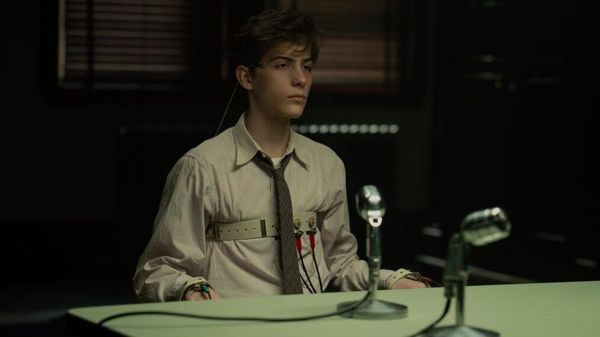
Primetime (2026, Oppenheim)

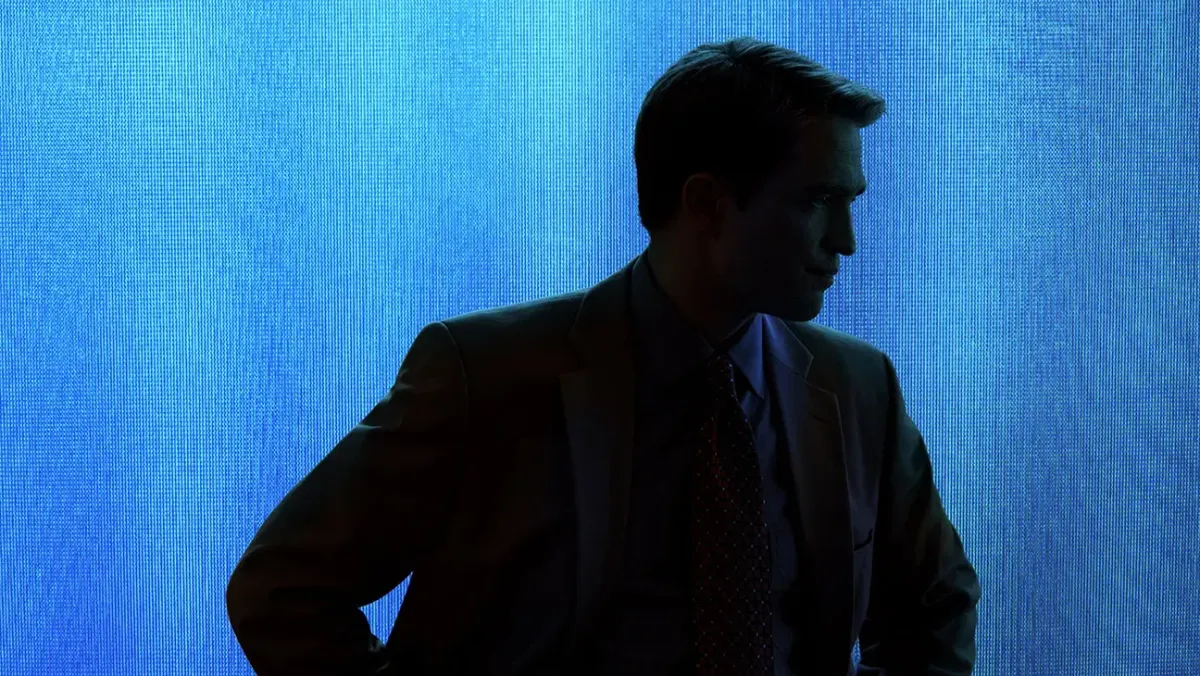
Major spoiler in the last paragraph.
For a long time, I've been waiting for someone my age (i.e., born in 1996) to make a mainstream movie. Lance Oppenheim, a documentarian best known for his good yet overrated HBO limited series Ren Faire, takes the prize. His documentary work has primarily focused on the gerontocracy clinging to control of American life--a worthwhile fixation, I might add--but what might a fellow Zillenial have to say about the transition between conventional televised entertainment to the domination of clippable, sensationalist moments of lizard-brain-scratching schadenfreude?
Gotcha journalism is not new, nor was it new in 2006. Yet To Catch a Predator predicted the legion of NIMBY and free-speech absolutist YouTubers who take an adulterated sense of justice into their own hands--the app I used to work for, Citizen, also derives some of its popularity from this phenomenon. Chris Hansen himself has been going on a (backfiring) anti-marketing blitz against the film, arguing that it's "detached from reality." He's right, but to paraphrase the fictional Hansen at the end of the film, we don't think of reality the same way.
When Chris Hansen says Primetime is "detached from reality," what I think he means is that it doesn't depict what really happened on To Catch a Predator's sets. It's also disconnected from reality in another sense, though: it has no grasp on To Catch a Predator's relationship to the world around it. As a documentarian, Oppenheim is very good at capturing these hermetic oddball communities--his style suits it. Primetime, however, suffers from the very insulation Oppenheim critiques in his documentaries. It exists in its own head, way up in the clouds, a mishmash of angles, formats, and lighting setups lacking in any real visual identity. The aspect ratio isn't even 4:3--the standard for TV during the time which the film is set--it's 1.50:1, the new standard for artier fair to distinguish itself from 2.39:1 (my favorite) which might be regarded in a few years as antiquated as the academy (1.33) ratio is now.
No, the problem is not that Primetime is "detached from reality," (it is, after all, a fiction), it's that it doesn't even try to evoke the era it's depicting. To be fair, when Oppenheim cuts into footage directly ressembing stuff from the 2000s, he gets the period mostly right. He just doesn’t do anything with the replication: instead of breathing new life into Y2K aesthetics, he wears them like a second skin. There's an obvious affection for the period in the production design and some of the casting--Oppenheim assembled a murderer’s row of 90s and 2000s comedic actors, completely wasting their talent--but drenching everything and everyone in bold colors and placing brass instruments on the score only draws comparisons to Taxi Driver. Oppenheim, suffice it to say, is no Scorsese. If we’re going to see the seductive quality of TV production, we need to feel it too--not feel superior to it.
Take Saddam Hussein. The film (just barely) acknowledges his fall as leader of Iraq, yet it leaves out the most crucial (for this movie, at least) aspect of it: his death was shot on a cell phone and served as one of the first viral To Catch a Predator-type videos to proliferate on the Internet. We sit behind smaller screens, but the song remains the same—look at this wicked person get punished and enjoy. Oppenheim either forgot to include this fact or he deliberately left it out. Regardless, the decision is tantamount to filmmaking malpractice—it insulates the film, distances its events from us, and (falsely) ennobles us to look down at those awful Bush years and praise ourselves for how far we’ve come since then.
Primetime is a cautionary tale, be sure of that. It also happens to be a warning we’ve been told countless times, in more convincing ways, and with more efficiency.
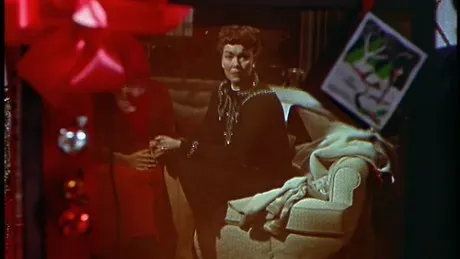
Oppenheim demonstrates no real storytelling instincts as director, framing most of the action in close-ups, playing scenes at the razor's edge of ironic and scary (without committing to one or the other), and employing excruciating didacticism. Getting us to feel gross about spending time with this weird TV journalist (played, admittedly quite well, like an alien getting used to its human host by Pattinson) is not enough to carry a movie. Nor is cutting to a mythical beast meant to symbolize ancient evil over and over and over again. The first time? OK, it's lazy, but sure, you want to give the story some resonance beyond its particulars. The second time? Pushing it. Three times, and immediately following the climax which already makes it excruciatingly clear that maybe hunting these freaks down and proverbially castrating them on television is maybe not the most ethical way of dealing with the problem? Ridiculous. Yet still someone in the audience applauded when Alex Winter blows his own head off at the end of the film. To me, that's exhibits A-Z in the case against Oppenheim. There should be absolutely no ambiguity that this man's suicide is a bad thing, that the creators of To Catch a Predator are, in fact, the predators. It's such an easy mark to hit, and Oppenheim can't manage it.
I would never be one to argue that a filmmaker should stay in their lane. Oppenheim should feel emboldened to make as many fiction films as his heart desires. But he should take a seat, have a cookie, and reflect on what his form actually achieves before he enters production on the next one.