Rapture of the Uncanny: An Interview with Heather Landsman on ee

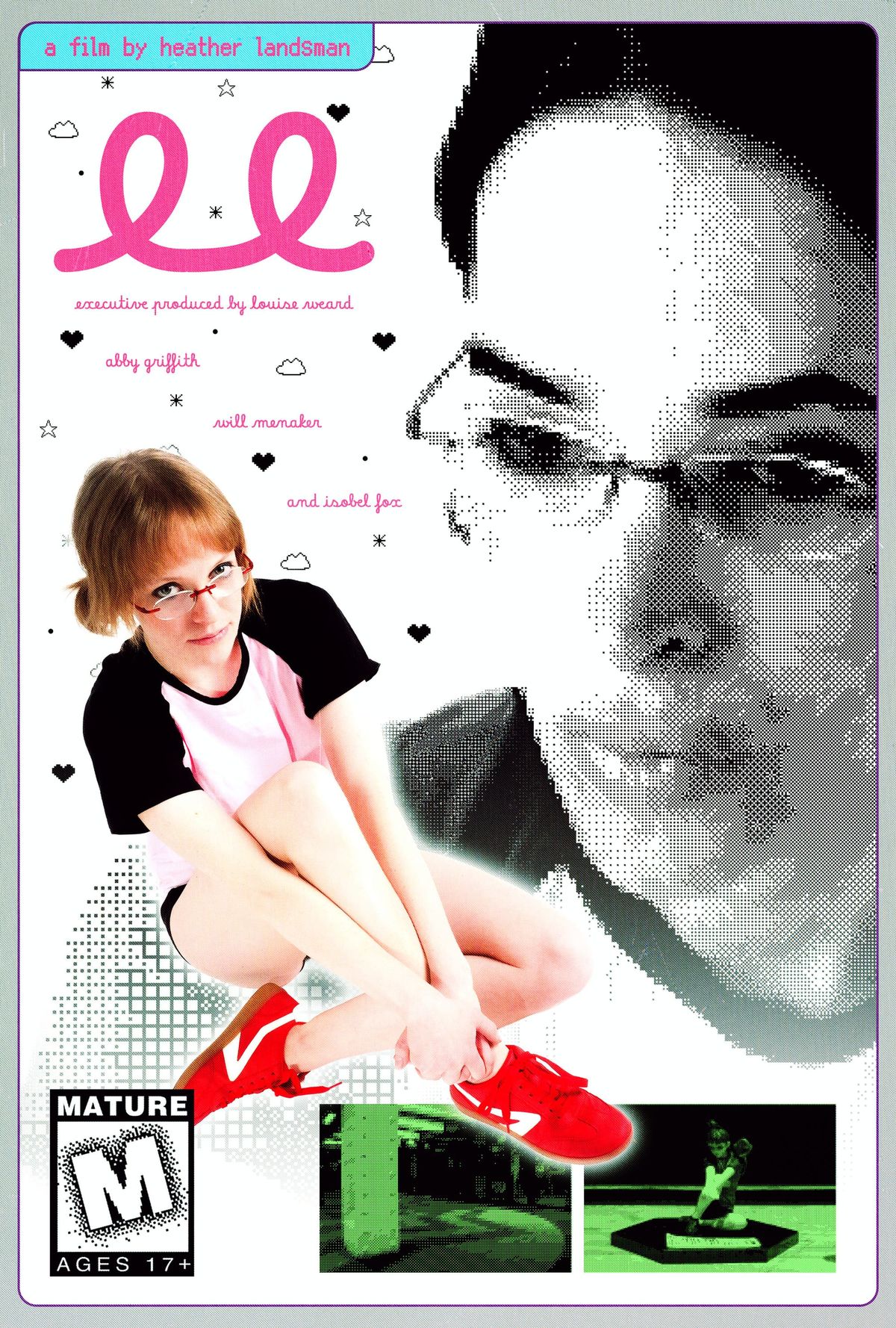
Increasingly, directors are looking back and staying there. I can't blame them; it's hard to look at the present moment with clear eyes. A select few, however, are reaching into the past and bringing it back to now, complicating our understanding of that past and informing our understanding of the present. Heather Landsman is one such director.
Heather has been a friend for a while now, but this was my introduction to her as a filmmaker. ee is a truly exciting short film, and it was a pleasure to get to know her a little better through her work. I spoke with Heather about ee, video games, and early 2000s aesthetics on the occasion of ee's screening at the New York Film Festival, where it plays as part of the New York Shorts program on October 7th, 8th, and 12th.
This interview has been lightly edited for readability.
Ethan J. Rosenberg: I had the good fortune of engaging with this movie independent of any other short films it’s being programmed with. It played at Fantastic Fest and now it’s at the New York Film Festival, but I also haven’t seen The Best of Me [Heather’s first feature documentary] yet, so this is my first time in your filmic world. The first thing that came to mind is, “Who’s gonna give you 10 million dollars for your feature?”
Heather Landsman: I freakin’ wish. I pray to the gods that happens.
EJR: I thought this was a really rich text. I actually watched it again right before we hopped on the call, and there were new layers unfurling for me. I honestly don’t think we’ll be able to get to all of what makes this movie great, but I wanted to start with your relationship to video games. A great video game can put us in touch with the infinite, and that’s a fact the characters in the film seem aware of as well. What’s your relationship to video games? What’s the role they play in your creative process?
HL: You know how everyone has that moment in their life that’s their first memory, the moment they gained consciousness, locked in, and woke up? Suddenly you’re aware of everything happening, and before that was black? For me, that moment was my third birthday. I remember going to our local zoo in New Jersey: I saw a buffalo, which was my favorite animal and still is. The image of that, and then going home and playing my brother’s copy of Halo on my family’s gigantic box CRT, are engrained in my mind. Specifically the second mission, when you land on the ring and look out at the horizon. I just remember seeing that as a kid and thinking, “Wow, I’m alive” all of a sudden. [Laughs] That’s something that has informed my everyday life and my creative work.
I would argue I am inspired more by video games than any other medium. More than any other movies, books, what have you. Especially the games of that era, when I was at an impressionable age, the primitiveness of the animation was on the cusp of being hyper realistic, but it was just off. So there was this 3D unreality, and that, combined with the most maximalist form of storytelling, and you’re controlling it, that’s something that’s fascinated me aesthetically and textually. Especially on a metatextual level, in regard to the interaction between the player and the piece of media. That sense has informed the way I look at things and the way I make movies. It’s something I’m constantly thinking about.
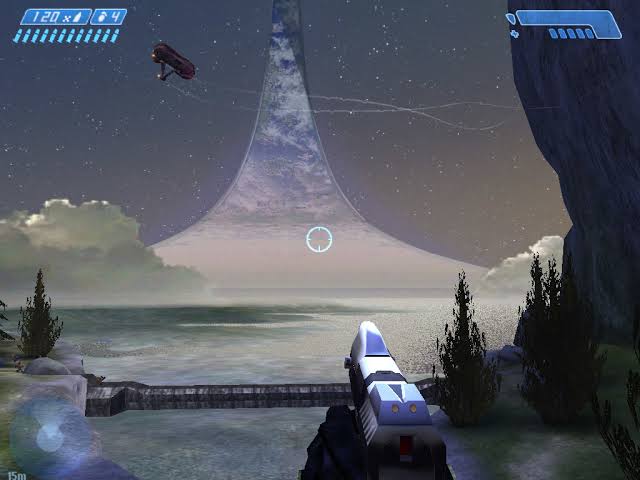
EJR: There’s a great beauty and a great melancholy in those images. Halo is a great example. Resident Evil has its moments, Silent Hill—I’ve noticed that some filmmakers are returning to that kind of image, and I feel that a lot of filmmakers are working with those textures but not really doing anything with them. What I really loved about this film is that it gives those images a charge again—a sexual charge. Do you feel like you’re repurposing those images, making a commentary, or internalizing what they represent?
HL: The thing I’m trying to do more than anything is evoke the feeling I got when I saw those images. Not in an overt sense, I’m not trying to just pastiche video games. I think there’s an inherent connection between the form and visual language of those kinds of games and the way I look at the world. It also informs the text of the piece. With this film, I got the idea for it, thought about what I had written, and I felt naturally this needed to feel like what it’s about. And that’s where being able to capture the look and feel of a late 90s/early 2000s video game, but with live action filmmaking, came into play. It was a tall task, but it was something I was really eager to dive into, map out, process, and figure out.
We’re starting to see more cross-pollination between the visual language of video games and movies, but a lot of filmmakers’ reference points are the more modern, fast-paced, shoot-'em-up games. Whereas the games of this era are more desolate, uncanny, and liminal. They’re capturing places you could find in reality, but in such a weird, skewed way. There’s next to no other people in it, and it invokes a feeling like no other that I think is enrapturing. That was my whole M.O. with ee: capture that vibe through the lens of this story of desire.
EJR: I remember you put out a call on Instagram for particular camera equipment. How did that equipment come together?
HL: When I got the idea for the movie, I was in the midst of a rewatch of Neon Genesis Evangelion, so it started subconsciously impacting the movie, and that made me think of Hideaki Anno’s live action work, especially Love & Pop, which is just one of the most striking uses of early digital in filmmaking. I came to the conclusion that, “Oh, this needs to be shot on a weird, early digital, glow-y, crunchy camera.” I put out a call asking if anyone had any cameras like that, and my good friend Dante Cokinos, who’s also a wonderful filmmaker, owns a Panasonic DVX100B. What struck me about his camera was that it wasn’t like a lot of other mini-DV or Hi-8 cameras, which are fuzzy and grainy. Instead, it’s smooth, almost like Vaseline has been thrown on the lens. When I saw that, I was like, “This is a no-brainer. I gotta use this camera.” He let me borrow it for the shoot, I got some tapes for it, and I got them digitized.
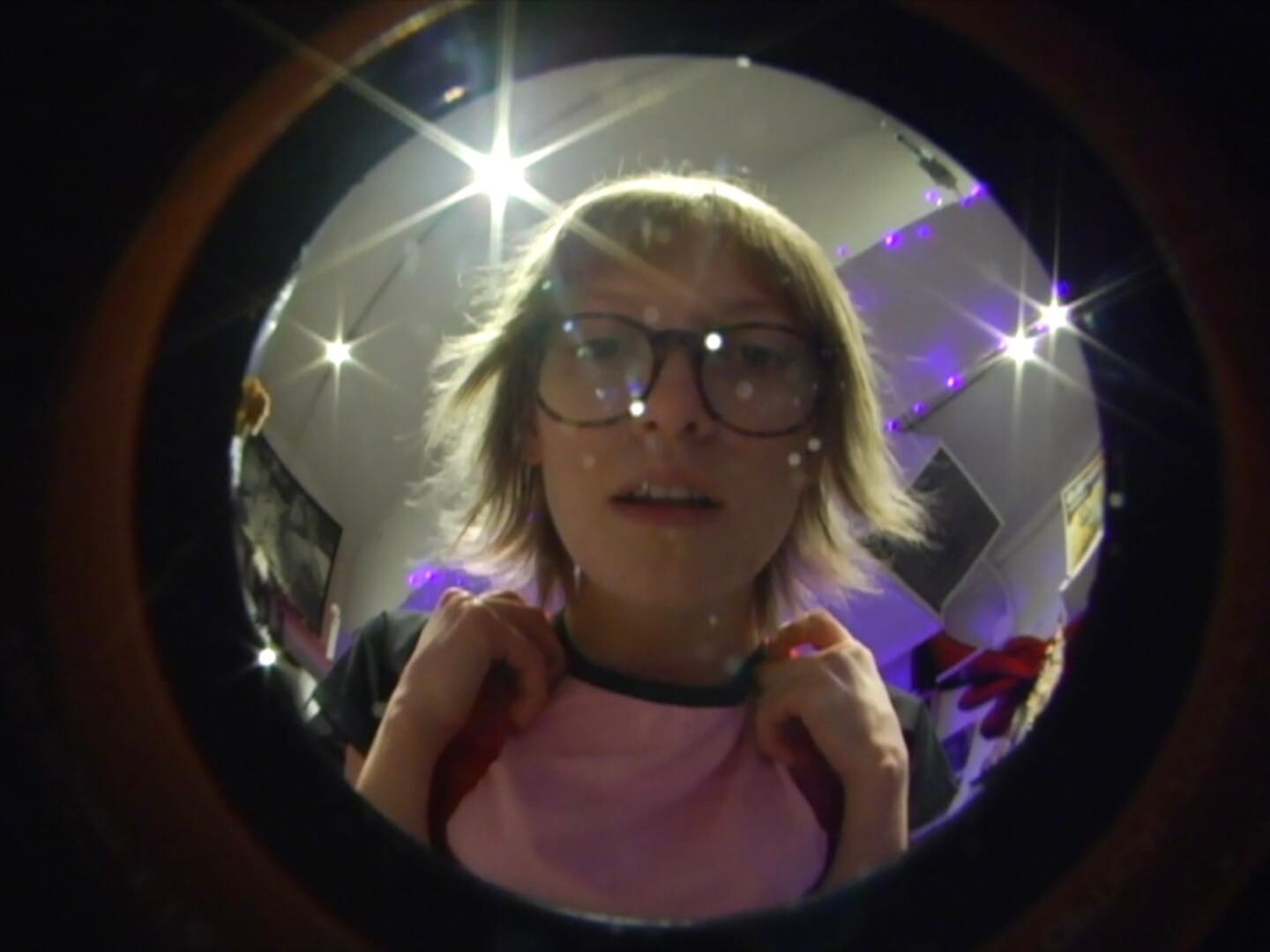
EJR: You mentioned Love & Pop. Are you thinking of particular references when you’re on set, or like you said with Neon Genesis is it more of an unconscious thing?
HL: I do shot list my movies, and most of it was really a process of shooting the images that naturally came to mind while writing the script. None of that was direct shots from other movies or anything. The one real overt visual inspiration I took from something else was the climactic sequence of Love & Pop: I was thinking a lot about Hideaki Anno’s approach to sexuality, and not showing things. A lot of times he’s known to be a bit of a pervert, but there are a lot of moments where he restrains himself and leaves it all to the audio, or he shows it through landscape imagery. I thought a lot about the opening scene of The End of Evangelion, or the sex scene between Misato and Kaji in the show: you just hear it, and you’re focused on these still shots of the dresser and the fan in the room. It’s such a cool and fascinating approach to a sex scene, and I knew I wanted to translate that with this.
EJR: I’m glad you brought up the sexual component, because I think that’s part of what makes this film so rich. A lot of films dealing with this era are afraid of sexuality. I think primarily of the incredible shot of [the characters] Emma and Julie framed with Wonder Woman in the middle.
HL: That just so happened to be what was behind them when I filmed that shot, but I was like, “Wow, that worked out perfectly.”
EJR: Yeah, that’s a gift from the gods, I thought it was genius. It takes this culture out of the realm of the virginal. We have this notion of nerd culture being this straight white male virginal thing, and I think this movie wrests that material away from that sensibility.
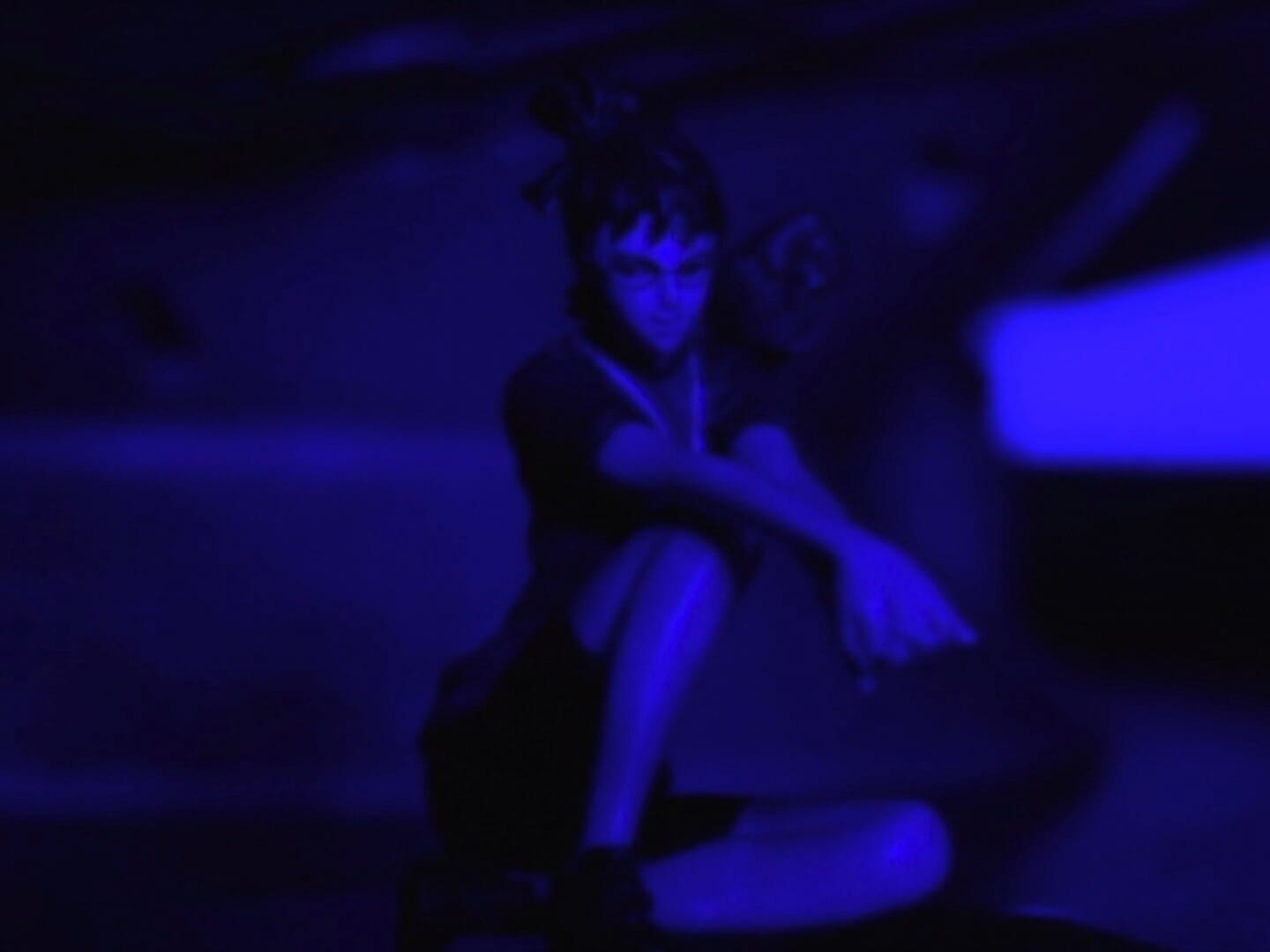
HL: I was thinking about that a lot, especially when looking for the store [we shot in] as our location. When we found the store we shot in, it was a no-brainer because it was packed out the wazoo with objects of worship for chuddy nerds, and I thought that added a layer of scuzz to it. But at the film’s heart there’s a sexual awakening going on, and I was interested to think about that in the realm of the nerd. A lot of the images naturally came together based on shooting in the space and figuring out what framing looked best and most textured.
EJR: Primetime was on my mind as I watched, and I know you liked it. Where did you see consonance between Oppenheim’s work with these aesthetics and your own? Personally, I think you did it better. You don’t come at it from a place of condescension. I think Primetime is condescending to, or afraid of, this kind of space, instead of embodying the space such as you do here.
HL: Oppenheim’s work is like classy junk food. It’s very navel-gazey, and almost trashy, and indulging in that formally is what I gravitate to the most. What I liked most about Primetime was the look and feel of it. I appreciated that a multi-million dollar movie wasn’t afraid to use cameras like that, in a way accurate to the era. I love when big filmmakers get all about digital instead of film. One of my big pet peeves is how a lot of my generation has started fetishizing celluloid and film. I love the texture of film and celluloid, it’s gorgeous, but the things I gravitate toward most in filmmaking is movies that are doing weird things with digital cameras. That’s something I appreciated about Primetime, and it’s something I wanted to do with this movie.
EJR: What did you think of the quasi-VHS in Backrooms?
HL: I was surprised at how well it was handled. I did buy it as shot on VHS, and I think what that kid’s doing is very impressive. He has a voice, and a clear frame of reference. I won’t name it, but there’s the other big Gen Z movie, and you hear interviews with the filmmaker and they’re just like, “I like Hereditary.” And it’s like, “Name a movie ten years or older.” [Laughs] In Backrooms, they shot it with cinema cameras and ran it through a VCR, which I think is a great approach to that.
EJR: Another point of reference that came up for me while watching ee was Demonlover, the Assayas film.
HL: It’s one of my favorite movies.
EJR: In terms of interpolating the aesthetics of early 2000s video games, and also pornography, that’s the north star.
HL: 100%. I’m honored by the comparison. The way that movie intersects pornography, video games, and anime, but it’s also corporate espionage and doing weird digital stuff. It’s the gold standard.
EJR: More generally, how do you feel ee locates itself in the erotic thriller subgenre?
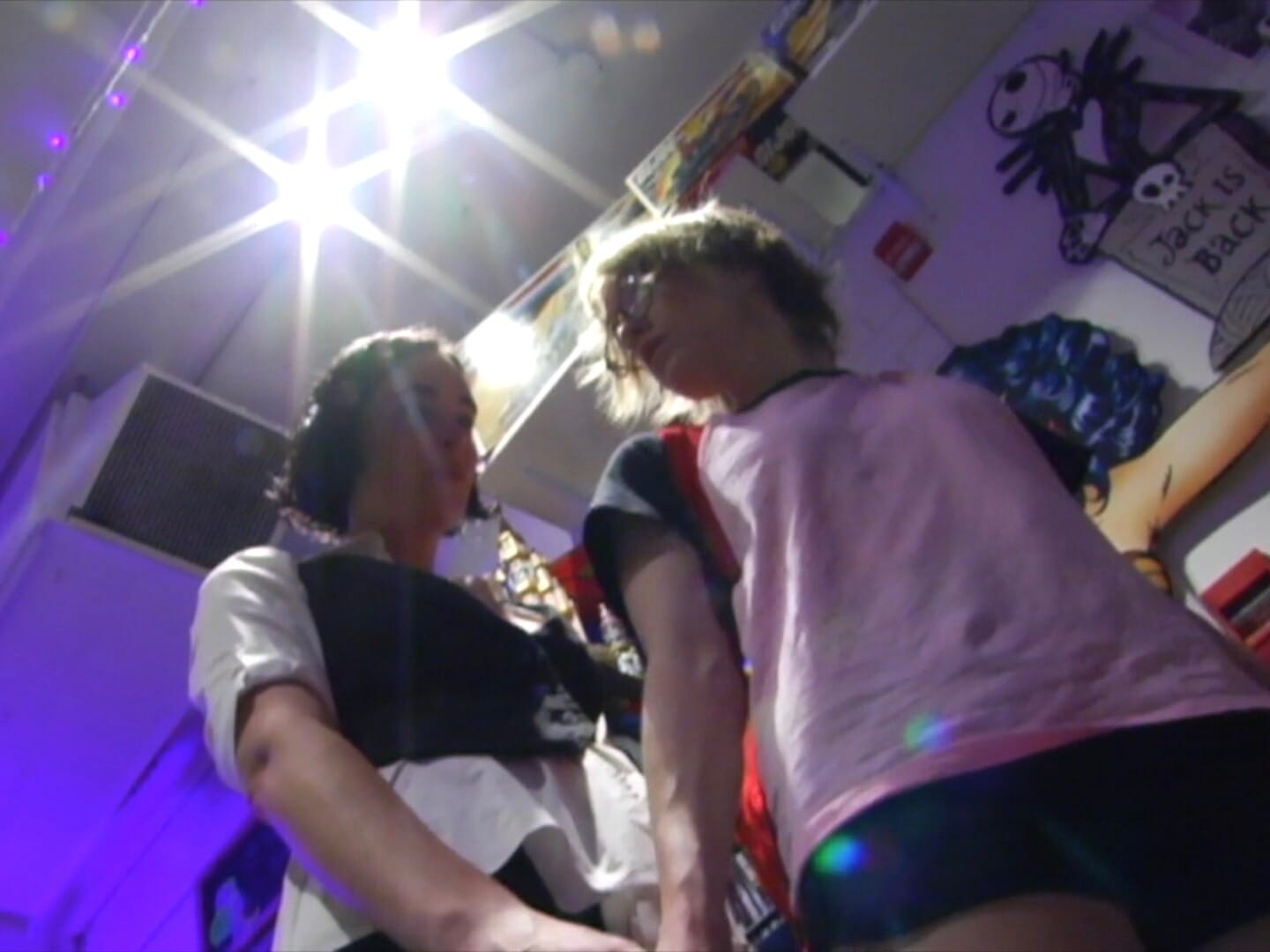
HL: As I’ve been writing more and more movies, they’ve been getting more and more erotic and unabashedly lesbian. But this was a new challenge for me: I wanted to be able to come out of the gate making a movie that shows and is about sexuality, sexual awakening, and the feelings that come with that. In terms of writing the script and directing it, I thought a lot about Bound by the Wachowskis, which is one of the all-time great lesbian erotic thrillers. The Wachowskis are some of my biggest artistic inspirations. Their work is amazing: boundary pushing, transgressive, but unabashedly sincere. They were making the biggest movies ever and they basically changed the game for Hollywood; it's endlessly inspiring to me. The fact they came out of the gate with that movie is crazy work. It’s such a textbook exercise in tension, and building tension between three characters in a tight space. I thought about that a lot in terms of the sexual tension and the escalation of suspense, and I hope ee sits in that vibe. Returning to Demonlover, I was thinking a lot about the visual language of classical experimental porn and the beats of that. That influenced the escalation of events in the film.
EJR: I wanted to mention the song being used at the end, the Tommy february6 cover of “Can’t Take My Eyes Off of You.” I love the Frankie Valli version, and I had never heard this version, and I thought it was the coolest shit. I’m very much in the school of “if you end your movie with a sick needle drop, that buys you a thousand points.”
HL: [Laughs] I’m glad.
EJR: This was the perfect song to end it on. How’d you come across the song, and how did it end up in the film?
HL: I can’t talk too much about it for legal reasons, but I’ve been an immense fan of hers for a while--I knew immediately that I wanted the movie to end on a song by her. The aesthetics she’s working with in her videos, but also the way it juxtaposes with the rest of the movie in the poppy-cheery sense. The song is what the movie is about, so it felt natural, and it’s one of my favorite covers of a song. It was one of the first things that came to mind while I was writing the movie, I knew it had to end with that. And I agree, a good needle drop can save a movie.