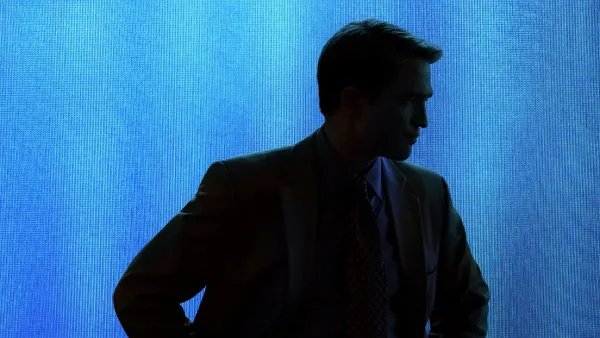
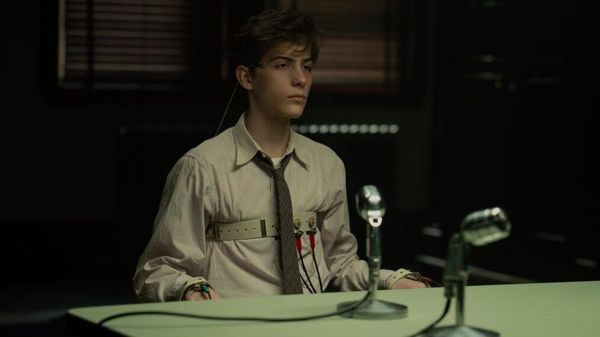
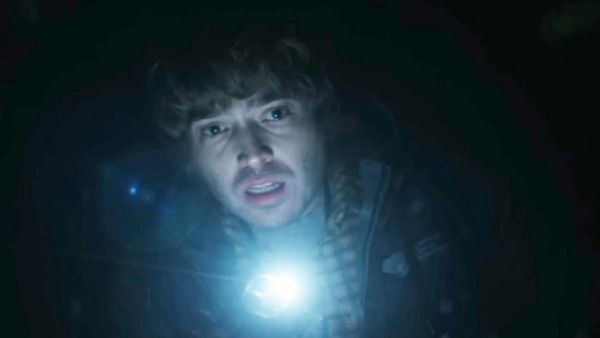
Lucky Strike (2026, Lurie)

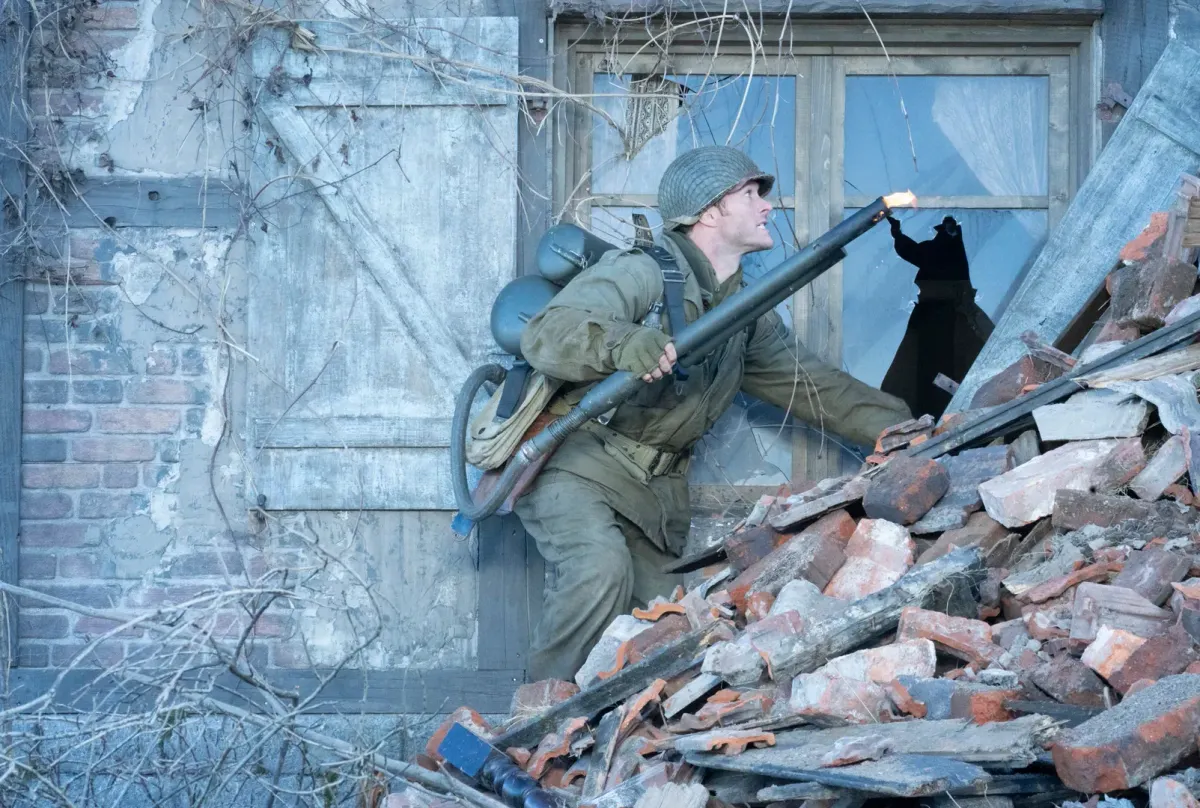
I don't usually write reviews three weeks after having watched the film in question, and Lucky Strike isn't even a movie that's worth the trouble (nor has it really stuck around in my mind), but something about it compels me to engage with it beyond a perfunctory shrug. Maybe it's the WAR.GOV ad I saw before the trailers began, signaling a move in the American mind away from the illusion of defense and back toward out-and-out imperialist violence. Maybe it's the fact that I haven't ever seen WWII depicted onscreen quite like this, mostly for the worse but also in a way that reflects our current visual conception of war. Maybe I just like thinking about and writing about movies.
I only saw Lucky Strike because I had been invited to experience my first AMC Screen Unseen movie, which like it says on the side of the tin unleashes early an upcoming movie upon an unsuspecting audience unprepared for the total schlock to which they're about to be subjected at the discounted price of $10. Despite the quality of the movie, however, or really because of it, I found the Screen Unseen experience quite valuable. It gave me an opportunity to engage with material I otherwise wouldn't have sought out, and it put on my plate a taste of what those outside my liberal bubble are really being fed.
The logline is airtight: wounded soldier John Castle attempts to traverse, mostly on foot, out from Nazi territory and into the arms of his fellow Americans. Many great (or at least really good) films have adopted a similar structure, including Peter Weir's The Way Back and Franklin Schaffner's Papillon. But Lucky Strike has no interest in tradition. An obvious vanity project for its star Scott Eastwood (he's one of its 15 producers), it feels more like a hallucination of one of his father's movies from the distant past--not quite Where Eagles Dare, not quite Kelly's Heroes, but a half-remembered dream, something Fuller or Peckinpah would toss off emerging from consciousness and disregard on the way to set later that morning.
Eastwood himself is an amiable presence onscreen, a quality that works against him as he grunts and grimaces and otherwise attempts to emulate Clint Eastwood's facial mannerisms. He seems too nice–perhaps able to evince a retro earnestness in the movie's framing device, but unwilling to get truly nasty when the occasion calls for it during the main action. Action which is, strangely, maybe even shamefully, a little compelling: I was completely unprepared for director Rob Lurie's drone-oriented Call of Duty cutscene approach to filming the carnage. His omniscient camera, an Eye in the Sky, emulates the images we've become more accustomed to seeing of war since the proliferation of drone warfare post-9/11. It's not pretty, but it's interesting, and that counts for something in the present media landscape. The movie is, however, an abject failure narratively. The aforementioned framing device makes absolutely no sense, and dialogue ("You're bleeding out. That's not good.") is so asinine, it undoes any goodwill (if you can call it that) earned by the action.
Happy 4th of July.