Minions & Monsters (2026, Coffin)

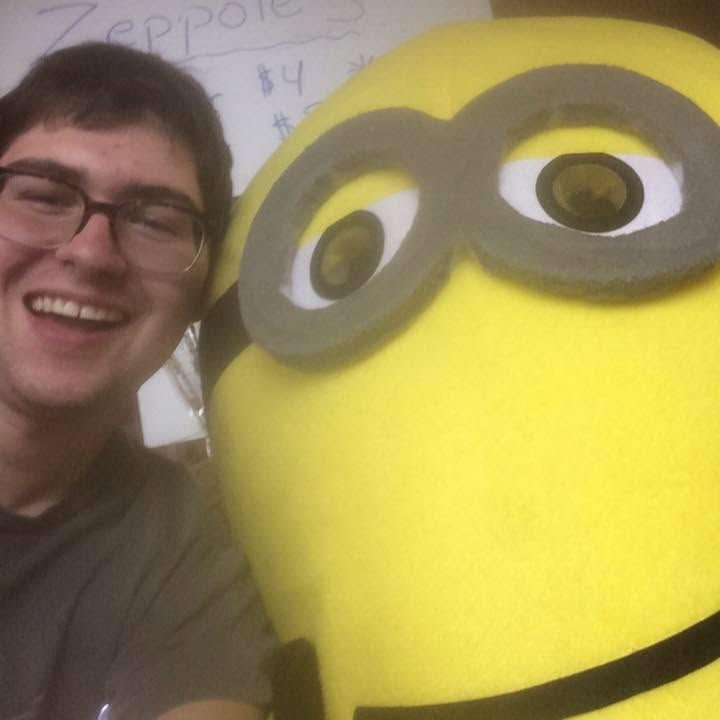
I'm a Minions guy–have been since Despicable Me. I hid behind the veil of irony for a long time, mostly to protect a false sense of integrity associated with my affection for highbrow fare. "Someone can't like Minions and Malick," I whispered to myself after my umpteenth clandestine viewing of Minions. "The wires just can't cross." Over time, however, I learned to let go of the tension imposed by this false dichotomy. I wore my Minions shirt outside of the home; I returned to the theater to see the Despicable Me movies; I stopped pretending it was annoying to be bombarded by these little yellow bastards on a biennial basis. By the time Minions & Monsters was announced and the marketing machine began to churn, I could just be honest: I was excited for a Minions movie.
I knew it took place during Hollywood's Golden Age, and I knew Pierre Coffin described it as a love letter to movies during his presentation at CinemaCon earlier this year, but neither of those facts inspired any real confidence. Love letters to the movies are practically poison, aren't they? I'm reminded of a quote from historian and former critic Peter Labuza: "fewer movies about the magic of movies, more movies that are just magic." Largely, I agree–filmmakers have become too self-referential, too enamored with the idea of the form and not with the form itself. But it didn't matter what the context was, my ass would be in a seat at an AMC come July. As a Minion would likely ask, "Por qué no poopaye?"
Minions & Monsters is a great movie. Not capital-G all-timer great, but great in an unequivocal way. One needn't justify its pleasures by saying it's "good for Illumination" or "better than the last one." It's delightful, witty, and empowering. It works as a love letter to cinema because it interpolates styles, genres, and motifs from across movie history–as far back as its origins in a mind-expanding and hallucinogenic opening title sequence–into the Minions mold. It contextualizes movie history into an idiom approachable to Gen A, giving them a sort of skeleton key to access the treasures of said history.
And that is, to these eyes, an act of stupendous generosity, both a repudiation of Cocomelon-style overstimulating bullshit and a warm invitation to engage with the breadth of film history: Orson Welles (out of focus) as we introduce this movie's primary minions; Chaplin, Lloyd, and Keaton right in a row; George Lucas (as himself!) stuck in a tiny glass case (perhaps of his own making). The easter eggs are abundant, but none are egregious. The focus is more on what these artists did, not a fetishization of the artists themselves: Coffin Minionizes the western, the sci-fi movie, and the rom-com with real attention paid to their respective visual cues, and there are numerous laugh-out-loud jokes here that both send up some of the greatest movies of all-time and exude total reverence for them. That same sketchy, slapsticky humor that is a hallmark of the Despicable Me universe remains, but it's elevated by real ambition and care.
There's a terrific belief in solidarity and community in Minions & Monsters, zeroing its story in on a trio of creative Minions that gives the undulating mass of yellow pills true humanity for the first time in the franchise's history. Stuart, Kevin, and Bob may have our hearts, but they aren't full-fledged characters the way James, Henry, and Ed are here. Gloves stained with pink-and-blue paint, eyes wide with ambition and joy, James, in particular, is as good an avatar for the young creative as I've seen in the movies.
The film is also remarkably self-reflexive. Upon accidentally barreling their way into the footage of a movie-in-progress, a film studio's owners insist "they have to be in every scene of the movie." (And, in an act of what can only be called cinephile pornography, immediately thereafter "As Time Goes By" plays.) The Minions dominate in silent cinema but falter once talkies take over (Singin' in the Rain? You may think. No way. Babylon? Impossible. But yes, both are nodded to), and they're booted onto the street.
With all the Trojan Horse structure, it's easy to forget that there is, in fact, a monster movie here. Trey Parker does a great Cartman-through-a-voicebox as Gary Orkam Oliver Magma Ichabod the Deceiver (Goomi), seducing the Minions into the hidden lair where his malevolent friends have been frozen for millennia. Things take a turn for the gooey when they, in turn, summon their all-seeing friend Irene, and the movie settles into more familiar city-leveling action during its climax. Certainly watchable, and the pacing feels downright retro when held up against the aforementioned bullshit, but it's a dismount from the bizarrely inspired opening half. Nevertheless, Pierre Coffin has, finally, earned his full-throated kudos: "Muak muak, para tu!"